Medicare Dentures October 17, 2025
Medicare dentures: A guide for seniors
D
Dental Services
Contributing Author
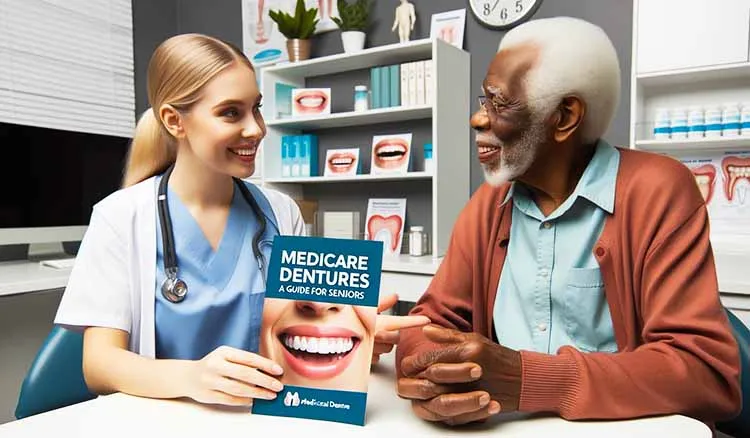
What are dentures?
- Dentures are removable replacements for missing teeth and surrounding tissues.
- There are two main types of dentures: full dentures and partial dentures.
- Full dentures are used when all of the natural teeth are missing, while partial dentures are used when some natural teeth remain.
Why are dentures important for seniors?
- Dentures play a vital role in enabling seniors to maintain proper nutrition by allowing them to chew food effectively.
- They also help improve speech and restore self-confidence.
Does Medicare cover dentures?
- Original Medicare, which includes Part A (hospital insurance) and Part B (medical insurance), typically does not cover dentures.
- However, it may cover certain dental procedures that are medically necessary, such as extractions required before getting dentures.
Medicare Advantage plans and denture coverage
- Medicare Advantage plans (Part C) are offered by private insurance companies approved by Medicare.
- These plans often offer additional benefits, including dental coverage.
- Some Medicare Advantage plans may cover a portion or all of the cost of dentures.
Standalone dental insurance plans
- Seniors who want comprehensive dental coverage, including dentures, may consider purchasing standalone dental insurance plans.
- These plans are available from private insurance companies and can provide coverage for various dental services, including dentures and related costs.
Medicaid and denture coverage
- Medicaid is a joint federal and state program that provides healthcare coverage for low-income individuals, including seniors.
- Each state determines its own Medicaid eligibility requirements and covered benefits.
- In some states, Medicaid may cover dentures for eligible seniors.
Other options for affordable dentures
- Discount dental plans: These plans offer reduced fees on dental services, including dentures, for a monthly or annual fee.
- Dental schools: Some dental schools provide low-cost or free dental care, including dentures, as part of their training programs.
- Community health centers: These centers offer dental services on a sliding scale based on income, making them more affordable for seniors with limited resources.
Tips for getting dentures covered by insurance
- Review your insurance plan: Understand the coverage and limitations of your insurance plan before starting the denture process.
- Check for pre-authorization requirements: Some insurance plans may require pre-authorization for denture procedures.
- Keep accurate records: Maintain copies of all dental records, including X-rays and treatment plans, which may be required for insurance claims.
- Consult with your dentist: Your dentist can assist in navigating the insurance coverage process and provide guidance on maximizing your benefits for dentures.
In conclusion
- Seniors seeking dentures may explore Medicare Advantage plans, standalone dental insurance plans, and Medicaid for coverage options.
- For those with limited financial resources, discount dental plans, dental schools, and community health centers may provide affordable denture options.
- It's essential to understand the coverage and limitations of your insurance plan, comply with any pre-authorization requirements, and keep accurate records throughout the denture process.
- Consulting with your dentist can also help ensure you make the most of your insurance benefits for dentures.
Found this article helpful?
Explore more insights or find a dental professional near you.